Okay, back to my side of the fence with my real views on drug prohibition. Without writing a dissertation, I want to discuss how The War on Drugs is irrational, unconstitutional, racist and immoral. (You asked for it, Vegas!).
Drug prohibition is completely irrational. It simply doesn’t make sense to spend $40 billion dollars per year on surveillance, arrests, incarcerations and bureaucratic drug warrior salaries while starving social programs that rehabilitate people with addiction problems. It is an absolute absurdity that we allow alcohol and nicotine, two of the most dangerous and addictive of all drugs, and we imprison users of marijuana and ecstasy. It’s also irrational to think that the War on Drugs keeps our children and neighborhoods safer. In 1933, when the prohibition of alcohol ceased, violent crime decreased sharply and immediately. This is because the illegality (i.e. scarceness) of alcohol made it a more valuable commodity, thereby creating an extremely lucrative black market. Just as alcohol prohibition gave us Al Capone and the Mafia, today’s drug war employs inner city gangs, international crime and terrorism organizations and corrupt police and politicians.
The War on Drugs is unconstitutional. The paranoia instigated by the drug warriors, has led to societal approval of major violations of our nation’s founding principles. Unconstitutional searches and seizures, wiretaps, entrapments and confiscations have been embraced as legitimate law-enforcement tools. During Reagan’s crusade against drugs in the 1980s, urine drug testing in the workplace became standard. Now, many Americans don’t even question this humiliating and invasive test of company loyalty. In 2003, Senator Joseph Biden (who happens to be a possible contender for the Democrats’ nominee for President in 2008), pushed the RAVE (Reducing Americans’ Vulnerability to Ecstasy) Act through both houses of Congress. The RAVE Act was hidden in a legislative bill dealing with child abduction (the Amber Alert Bill), and passed with bi-partisan support. The RAVE Act essentially allows the government to prosecute business owners, should any of their customers use or sell illegal drugs on their property or at their event – even if the owners have taken steps to stop such activity. Benjamin Franklin once said something like, “those who would trade freedom for security, deserve neither freedom nor security.”
The War on Drugs is, and has always been, a war against minorities. The first anti-drug law passed in the United States was passed when, in 1875, the city of San Francisco (ironically enough) passed a law that made smoking opium illegal. Middle class, Euro-Americans had been taking opium in a liquid form for some time, but when local newspapers started running reports of white women being lured into Chinese opium dens and turned into sexual slaves, legislative action was taken. Not surprisingly, the use of liquid opium continued to be legal…but smoking opium, as the Chinese immigrants did, was outlawed. Cocaine was made illegal in 1914, because lawmakers believed testimony from Dr. Christopher Koch who said that “most of the attacks upon the white women of the South are the direct result of a cocaine-crazed Negro brain.” In 1937, marijuana became illegal as fears that its use was spreading from Mexicans to white American youths, and that something needed to be done. Currently, though most drug offenders are European-American, African-Americans are sent to state prisons on drug charges at 13 times the rate of European-Americans. Much of this racial disparity is due to sentencing guidelines in which possession of five grams of crack nets the same five-year mandatory minimum sentence as the sale of 500 grams of powder cocaine.
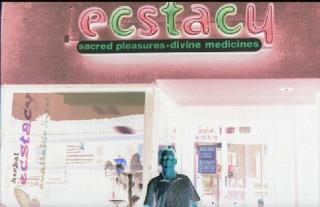 That’s enough drug war rant for tonight. I’m tired and fresh out of crack. The last part of this trilogy will address the immorality of the War on Drugs, from a personal experience perspective.
I know you’re waiting with baited breath...
Drug prohibition is completely irrational. It simply doesn’t make sense to spend $40 billion dollars per year on surveillance, arrests, incarcerations and bureaucratic drug warrior salaries while starving social programs that rehabilitate people with addiction problems. It is an absolute absurdity that we allow alcohol and nicotine, two of the most dangerous and addictive of all drugs, and we imprison users of marijuana and ecstasy. It’s also irrational to think that the War on Drugs keeps our children and neighborhoods safer. In 1933, when the prohibition of alcohol ceased, violent crime decreased sharply and immediately. This is because the illegality (i.e. scarceness) of alcohol made it a more valuable commodity, thereby creating an extremely lucrative black market. Just as alcohol prohibition gave us Al Capone and the Mafia, today’s drug war employs inner city gangs, international crime and terrorism organizations and corrupt police and politicians.
The War on Drugs is unconstitutional. The paranoia instigated by the drug warriors, has led to societal approval of major violations of our nation’s founding principles. Unconstitutional searches and seizures, wiretaps, entrapments and confiscations have been embraced as legitimate law-enforcement tools. During Reagan’s crusade against drugs in the 1980s, urine drug testing in the workplace became standard. Now, many Americans don’t even question this humiliating and invasive test of company loyalty. In 2003, Senator Joseph Biden (who happens to be a possible contender for the Democrats’ nominee for President in 2008), pushed the RAVE (Reducing Americans’ Vulnerability to Ecstasy) Act through both houses of Congress. The RAVE Act was hidden in a legislative bill dealing with child abduction (the Amber Alert Bill), and passed with bi-partisan support. The RAVE Act essentially allows the government to prosecute business owners, should any of their customers use or sell illegal drugs on their property or at their event – even if the owners have taken steps to stop such activity. Benjamin Franklin once said something like, “those who would trade freedom for security, deserve neither freedom nor security.”
The War on Drugs is, and has always been, a war against minorities. The first anti-drug law passed in the United States was passed when, in 1875, the city of San Francisco (ironically enough) passed a law that made smoking opium illegal. Middle class, Euro-Americans had been taking opium in a liquid form for some time, but when local newspapers started running reports of white women being lured into Chinese opium dens and turned into sexual slaves, legislative action was taken. Not surprisingly, the use of liquid opium continued to be legal…but smoking opium, as the Chinese immigrants did, was outlawed. Cocaine was made illegal in 1914, because lawmakers believed testimony from Dr. Christopher Koch who said that “most of the attacks upon the white women of the South are the direct result of a cocaine-crazed Negro brain.” In 1937, marijuana became illegal as fears that its use was spreading from Mexicans to white American youths, and that something needed to be done. Currently, though most drug offenders are European-American, African-Americans are sent to state prisons on drug charges at 13 times the rate of European-Americans. Much of this racial disparity is due to sentencing guidelines in which possession of five grams of crack nets the same five-year mandatory minimum sentence as the sale of 500 grams of powder cocaine.
 That’s enough drug war rant for tonight. I’m tired and fresh out of crack. The last part of this trilogy will address the immorality of the War on Drugs, from a personal experience perspective.
I know you’re waiting with baited breath...


